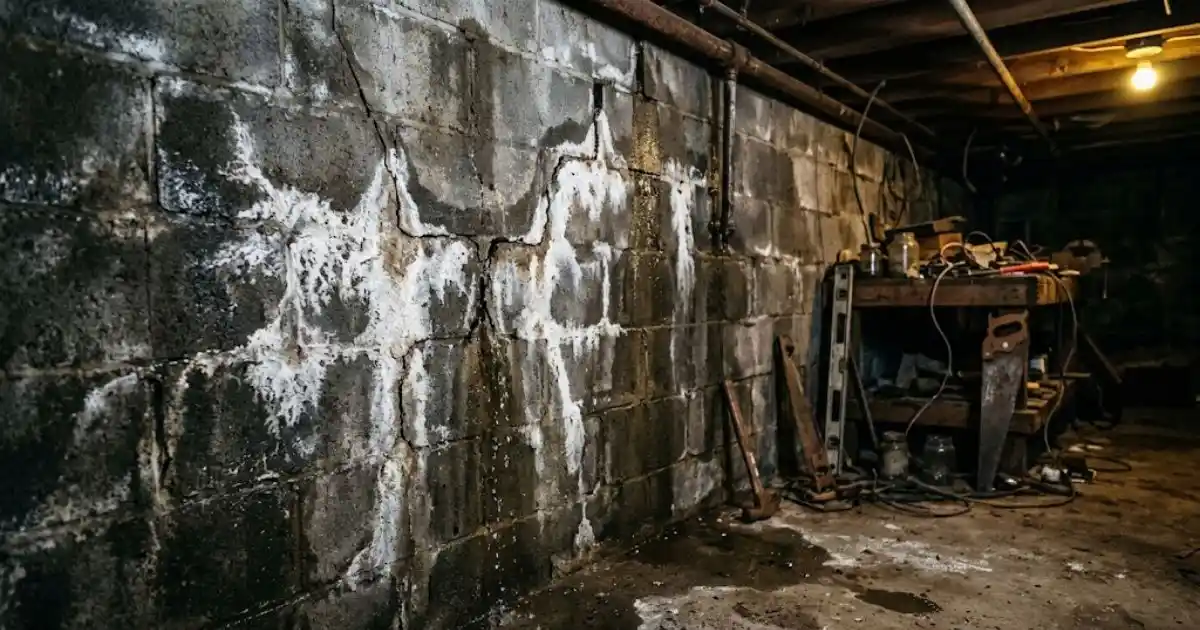
If your basement has flooded more than once and you live in one of Winder's older homes, particularly near the historic downtown corridor, there's a real pattern worth understanding rather than just cleaning up after each event.
A Naming History That Explains the Neighborhood's Age
Winder's downtown grew up around Broad Street after the town was renamed from Jug Tavern in 1893, specifically to convince the Seaboard Air Line Railway to reroute its tracks through downtown rather than four miles south. That means many of the residential properties closest to downtown are genuinely old, built across the decades that followed, well before modern foundation waterproofing and grading standards existed.
That railway-driven growth pattern means the age of a home in this specific part of Winder correlates fairly directly with its distance from Broad Street, since development radiated outward from that historic center over time. A homeowner close to downtown can reasonably assume an older foundation era than a homeowner in a subdivision built decades later further out, and that assumption is a useful starting point for thinking about basement flooding risk specifically.
Why Age Translates Directly Into Recurring Flooding
Older foundations were built with less consistent waterproofing than current code requires, and decades of ground settling can open hairline cracks that let groundwater seep in gradually during sustained rain. Exterior grading around older homes has also sometimes shifted over the years, in some cases now sloping toward the foundation instead of away from it, which is the opposite of what modern grading standards require.
Landscaping changes over decades, added flower beds, patios, or driveway extensions, can also unintentionally alter original grading without anyone realizing it happened gradually over years of small changes. A homeowner who's owned an older property for a long time may not even remember what the original grading looked like, which is part of why a fresh professional assessment often reveals a grading issue the homeowner had no idea existed.
The Cycle That Keeps Repeating Without a Real Fix
Cleaning up a flooded basement without addressing the underlying grading or foundation crack issue means the same conditions are still there for the next heavy rain. This is why recurring basement flooding calls from this part of Winder tend to come from the same addresses more than once, not because of bad luck, but because the structural cause was never actually resolved between events.
We see this pattern often enough that a second call from the same address within a year or two is treated as a strong signal that the first response, while necessary at the time, didn't include the deeper assessment that would have identified the actual cause. That's a genuinely useful thing for a homeowner to know before a second event happens, not just after.
What Actually Breaks the Pattern
A proper assessment after a repeat flooding event should look at grading, foundation crack sealing, and sump pump capacity together, not just extract and dry the water each time. We can identify which of these is the likely driver during a flooded basement cleanup response, and flag when a separate waterproofing or grading contractor is the next practical step to actually stop the cycle.
What We Look For During a Repeat-Flooding Assessment
When a basement has flooded more than once, we pay particular attention to the water entry pattern, whether it's coming up through the floor, seeping along a specific wall, or entering near a specific corner, since each pattern points toward a different likely cause. Water entering evenly across the floor often suggests a groundwater or hydrostatic pressure issue, while water concentrated along one wall more often points to a specific grading or crack issue in that area.
We document this pattern clearly as part of our assessment, since that documentation is exactly what a waterproofing contractor needs to scope their own work efficiently rather than starting their investigation from scratch. Sharing this information directly between the cleanup response and the follow-up contractor conversation helps move a homeowner from repeat flooding to an actual resolution faster.
Setting Realistic Expectations About Cost and Effort
Addressing the root cause of recurring basement flooding, whether that's grading regrading, foundation crack injection, or a sump pump upgrade, is a real investment, sometimes a more significant one than another round of cleanup. But for a homeowner who's dealt with this more than once, that investment usually pays for itself over time compared to repeated cleanup costs, lost belongings, and the ongoing mold risk that comes with each new event.
Is It Worth Fixing the Root Cause Before Selling the Home?
Yes, generally. A documented history of resolved flooding with real corrective work, invoices from a licensed waterproofing contractor, before-and-after moisture readings, tends to be viewed more favorably by buyers and inspectors than an unresolved recurring issue disclosed at sale time with no record of anything having been done about it. Addressing the cause before listing a property can also prevent a flooding history from becoming a negotiating point that costs more at closing than the original repair would have. Sellers who can point to a specific, documented fix rather than a vague assurance that 'it's been fine lately' tend to face far less friction during the inspection and negotiation phase of a sale. That documentation also gives a buyer's own inspector a clear, specific answer rather than an open question that can stall negotiations during closing.
Dealing With This Right Now?
Call for same-day dispatch in Winder and Barrow County.
Common Questions
It's a common pattern in this older housing stock, but common doesn't mean unavoidable. Grading and foundation crack repair can meaningfully reduce recurrence even in an older home.
That handles the symptom each time but doesn't reduce mold risk or long-term structural wear, so addressing the underlying cause is usually the better long-term approach even if it takes more upfront effort.
Often yes, based on where water is entering and the pattern of moisture in the space, though a dedicated waterproofing assessment gives a more definitive answer than a cleanup response alone can provide.
Yes, generally. A documented history of resolved flooding with real corrective work tends to be viewed more favorably by buyers and inspectors than an unresolved recurring issue disclosed at sale time.
If you're dealing with this in Winder, our Flooded Basement Cleanup page covers the full process, and we also cover Braselton on regular dispatch.
Have Damage That Needs Attention?
Call now for emergency dispatch anywhere in Winder and Barrow County.
☎ Call (678) 798-8530