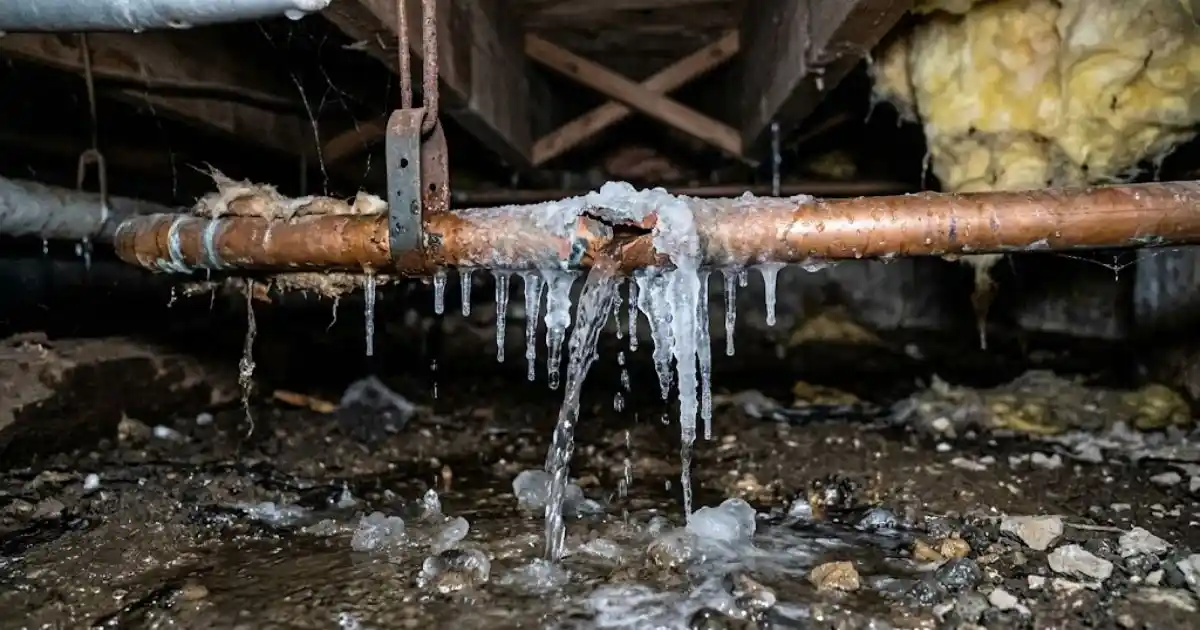
Georgia doesn't see the extended deep freezes that Northern states plan for every winter, and that's exactly what makes an occasional hard freeze here more dangerous for pipes, not less.
Why Infrequent Cold Is More Dangerous Than Constant Cold
Homes in consistently cold climates are built with pipe insulation and heat tracing designed for regular freezing conditions. Georgia homes, including many in Winder, often aren't built to that same standard, since hard freezes are infrequent enough that full winterization wasn't part of standard local construction, especially in older housing stock.
This is a genuine construction-standard gap, not a matter of homeowner negligence, since building codes and typical practice in a region are shaped around that region's normal weather patterns. A builder in Winder decades ago reasonably didn't design for the kind of sustained hard freeze that's simply rare here, which is exactly why the occasional freeze event catches so many homes unprepared relative to what a Northern home would experience in the same temperature.
Where Pipes Are Most Exposed in a Typical Winder Home
Uninsulated crawlspaces, exterior-wall plumbing runs, and outdoor spigots are the most common freeze points. Older homes near Winder's historic downtown corridor, some with plumbing dating back decades, are particularly exposed since crawlspace insulation standards have changed significantly since much of that housing was built.
A quick, practical way to check your own exposure is walking the exterior of your home and noting where plumbing runs along an outside wall rather than an interior one, since interior plumbing is naturally buffered by the home's heated space in a way exterior-wall plumbing isn't. Crawlspace vents left open through winter are another commonly overlooked exposure point worth checking before a forecasted freeze.
What Actually Prevents a Freeze-Related Burst
Letting faucets drip slightly during a hard freeze keeps water moving, which reduces the pressure buildup that causes pipes to crack. Opening cabinet doors under sinks on exterior walls lets warmer indoor air reach the pipes, and insulating exposed crawlspace or exterior pipes ahead of freeze warnings is a real, low-cost preventive step.
None of these steps require major investment or advance planning beyond watching the forecast, which is part of why they're worth doing every time a hard freeze warning is issued for Barrow County, even if it feels like overkill for what might turn out to be a mild cold snap. The cost of the precaution is trivial next to the cost of a burst pipe and the water damage that follows it.
If a Pipe Does Burst
Shutting off the main water valve immediately matters more than anything else in the first minutes. Every extra minute the water runs adds to both the extraction work and the risk that water travels further into framing and subfloor before it's stopped. Corrosion-related failures in older plumbing are also common in this area's older housing stock, separate from freeze events entirely, so a burst pipe here doesn't always mean a freeze was the cause.
What a Response Actually Involves
Once the water is shut off, response starts with extracting standing water and assessing how far it traveled into walls, subfloor, and any adjacent rooms, since a burst pipe often sends water further than what's immediately visible. Structural drying with air movers and dehumidifiers typically runs for several days, monitored with moisture readings, before any repair to walls or flooring can begin safely.
The pipe repair itself is usually a separate plumbing job from the water damage restoration, which means coordinating between a plumber addressing the actual pipe failure and a restoration crew addressing the resulting water damage. We're glad to coordinate timing with whichever plumber you use, since closing up walls before both the pipe repair and the drying process are confirmed complete risks problems down the line.
A Note on Vacant or Vacation Properties
Homes left unoccupied during a freeze warning, whether for a short trip or a longer vacancy, face elevated risk since no one is present to notice a leak immediately if one occurs. Keeping the thermostat set to a reasonable minimum temperature rather than turning heat off entirely during winter travel is a genuinely worthwhile precaution for any Winder homeowner planning to be away during a forecasted freeze.
What Temperature Should I Keep My Thermostat At If I'm Away During a Freeze Warning?
A common recommendation is keeping it no lower than around 55 degrees Fahrenheit, enough to prevent interior pipes from reaching freezing temperatures even during a cold snap. It's a small ongoing heating cost compared to the cost of a burst pipe and the water damage restoration that follows one, and it's worth setting as a standing habit for any winter travel rather than remembering to adjust it specifically before each forecasted freeze.
A Broader Look at Georgia's Freeze Preparedness Gap
This same infrequent-cold pattern affects more than just plumbing across the state, insulation standards, HVAC sizing, and even road treatment infrastructure in Georgia are generally built around the region's typical mild winters rather than sustained hard freezes. Pipes are simply the most common and most costly way this gap shows up inside an individual home, which is part of why proactive freeze preparation matters more here than the region's average winter temperature alone would suggest, and it's a useful frame for why a single hard freeze can cause outsized damage compared to a region that sees cold weather every year. Checking your own home's exposure ahead of the next freeze warning costs nothing and takes only a few minutes.
Dealing With This Right Now?
Call for same-day dispatch in Winder and Barrow County.
Common Questions
Sustained temperatures below freezing for several hours, especially overnight, are enough to put exposed or uninsulated pipes at real risk, even without the extreme cold other regions see.
Yes, it's a genuinely useful, low-cost step, since moving water is less likely to freeze and expand inside the pipe than standing water.
Yes, this is worth confirming ahead of time rather than searching for it during an active burst pipe, since every minute spent locating the valve is a minute of continued water damage.
A common recommendation is keeping it no lower than around 55 degrees Fahrenheit, enough to prevent interior pipes from reaching freezing temperatures even during a cold snap.
If you're dealing with this in Winder, our Burst Pipe Repair page covers the full process, and we also cover Braselton on regular dispatch.
Have Damage That Needs Attention?
Call now for emergency dispatch anywhere in Winder and Barrow County.
☎ Call (678) 798-8530