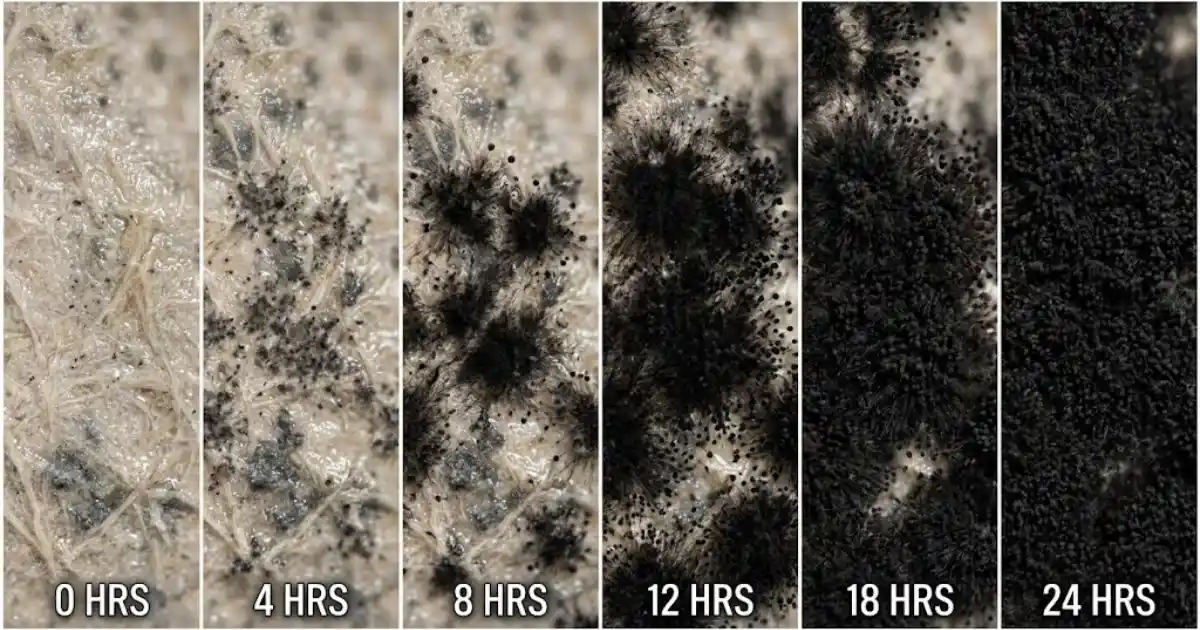
The short answer is faster than most people expect, especially in Georgia's humid climate. Understanding the real timeline is useful because it shapes how urgently a leak needs to be addressed once it's found.
The General Timeline
In warm, humid conditions like a Georgia summer, mold growth can begin within 24 to 48 hours on materials that stay wet, drywall paper, carpet backing, and wood framing are all organic-enough surfaces to support early growth quickly. That timeline can extend somewhat in cooler, drier conditions, but 24 to 48 hours is the realistic window to plan around rather than assuming there's more time.
It's worth being specific about what 'growth begins' actually means here: it's not that visible mold appears within two days, it's that the biological process starts within that window on the right surface with the right conditions. Visible colonies often take longer to show up, which is exactly why people underestimate how far along a problem already is by the time they can actually see it.
Why Humidity Matters as Much as the Leak Itself
A slow, small leak in a already-humid room can actually support mold growth faster than a larger leak in a well-ventilated space, since mold needs sustained moisture and airflow limitations more than it needs a large volume of water. This is part of why bathrooms, basements, and enclosed closets are common mold starting points even from relatively minor leaks.
Georgia's ambient summer humidity compounds this further, since a room that's already sitting at elevated humidity before a leak even happens gives mold a head start that a drier climate wouldn't provide. This is one reason the same size leak can produce very different outcomes depending on the season and the specific room's baseline ventilation, not just the leak's size or duration.
What Actually Slows It Down
Fast extraction and drying is the single most effective way to interrupt that timeline. Air movers and dehumidifiers brought in within the first day of a leak being discovered can pull materials back to a dry baseline before mold has established, while the same leak left to sit for three or four days often means mold has already started, even if it isn't visible yet.
Professional drying equipment is meaningfully more effective here than opening a window or running a box fan, since the goal is pulling moisture out of the material itself, not just moving air across the surface. That distinction matters most in the first 24 to 48 hours, which is exactly the window where the difference between adequate and inadequate drying determines whether mold gets a foothold.
What to Do If You Find a Leak Today
Stop the water source if possible, extract standing water, and get air moving through the affected space as soon as you can. If the leak has been active for more than a day or two before discovery, a moisture check is worth doing even without visible mold, since growth can start inside a wall cavity before it shows on the surface.
Why the Material Matters Almost as Much as the Timeline
Not every wet surface carries the same mold risk on the same timeline. Solid, non-porous materials like tile or sealed concrete resist mold growth far longer than porous materials like drywall paper, carpet padding, or untreated wood, since mold needs an organic food source, not just moisture, to establish itself. This is part of why the same leak can leave one surface completely fine and an adjacent surface at real risk within the same 24 to 48 hour window.
Knowing which materials in your specific home are most vulnerable is useful for prioritizing where to focus drying effort when a leak happens. Carpet, drywall, and any wood flooring or cabinetry in the affected area deserve the fastest attention, while a tile floor in the same room, while still worth drying, carries meaningfully less urgency on its own.
A Practical Georgia-Specific Consideration
Because Georgia's summer humidity often sits well above what's considered ideal for preventing mold even without an active leak, homes here benefit from paying closer attention to ambient indoor humidity generally, not just reacting to obvious leaks. A whole-home dehumidifier or simply monitoring humidity levels in historically damp areas like a basement can meaningfully lower the baseline risk that turns a minor leak into a mold problem.
What Indoor Humidity Level Is Considered a Safer Baseline in Georgia?
Keeping indoor relative humidity below roughly 50 percent is a commonly cited target for reducing general mold risk, though a professional assessment can give guidance specific to your home's conditions. A simple household hygrometer, inexpensive and widely available, is a practical way to keep an eye on this without needing professional equipment, and checking it periodically in historically damp areas like a basement can flag a rising trend before it becomes a visible problem. Pairing a hygrometer reading with a simple dehumidifier in a chronically humid space is often enough to keep that baseline risk in check year-round, well before any specific leak ever becomes a factor. This kind of baseline humidity management is a genuinely worthwhile habit for any Georgia home, not just one with a documented past leak, since it lowers overall risk regardless of whether a specific leak ever actually happens on that particular property at all, since lower ambient humidity is protective against mold in general, not just against one specific incident.
Dealing With This Right Now?
Call for same-day dispatch in Winder and Barrow County.
Common Questions
For a small, clean-water leak caught and dried quickly, a check often isn't necessary. For anything that sat longer than a day or affected a wall cavity, a moisture check is a reasonable precaution.
Basements typically hold higher ambient humidity even without an active leak, which can mean mold establishes faster there than in a well-ventilated upstairs room with the same size leak.
A household fan helps somewhat, but it usually isn't enough on its own for anything beyond a very small, quickly caught spill, since it moves air rather than actively pulling moisture out of the carpet backing and pad underneath.
Keeping indoor relative humidity below roughly 50 percent is a commonly cited target for reducing general mold risk, though a professional assessment can give guidance specific to your home's conditions.
If you're dealing with this in Winder, our Structural Drying page covers the full process, and we also cover Loganville on regular dispatch.
Have Damage That Needs Attention?
Call now for emergency dispatch anywhere in Winder and Barrow County.
☎ Call (678) 798-8530