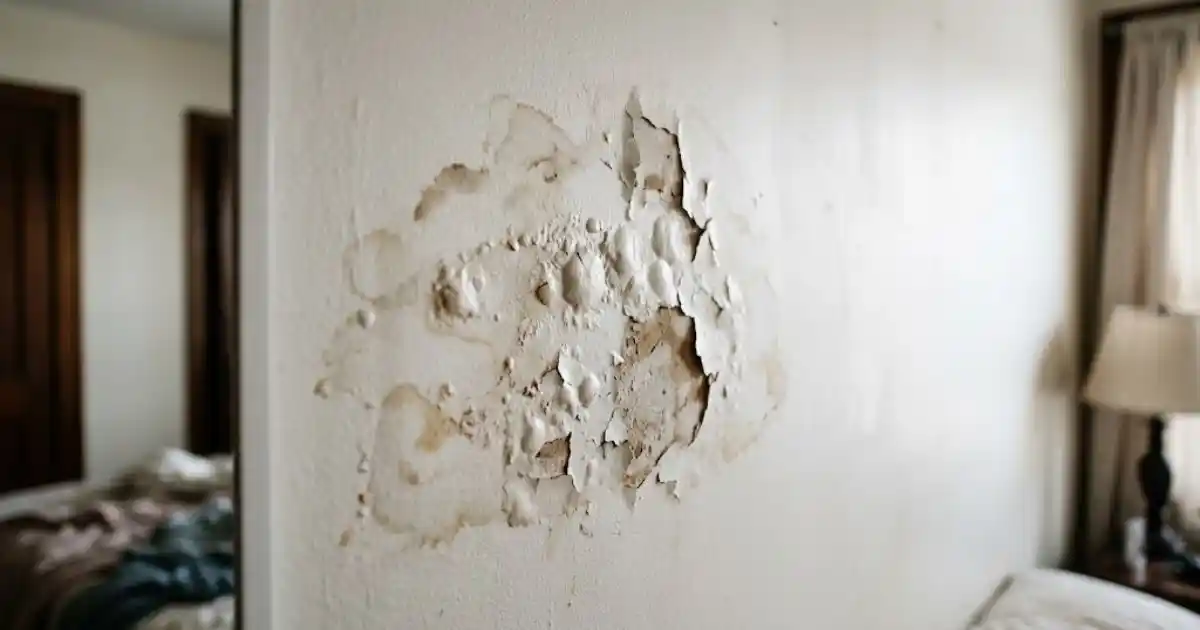
Not all water damage announces itself with an obvious stain. Some of the most damaging leaks sit quietly inside a wall cavity for weeks, and knowing the subtler signs can catch it before it becomes a much larger repair.
Discoloration That's Easy to Dismiss
A faint yellow or brownish tint on paint or wallpaper, especially near a corner or baseboard, is often written off as age or dirt. If it's new, or slowly spreading, it's worth a closer look, since that kind of subtle discoloration is one of the earliest visible signs of moisture traveling through a wall cavity.
A useful way to tell the difference between old, harmless discoloration and something active is to note the exact edges of the stain with a pencil mark and check back in a week or two. If the discoloration has spread beyond your marked boundary, that's a meaningfully different situation than a stain that's simply been there unchanged for years.
Texture Changes You Can Feel, Not Just See
Drywall that feels slightly soft, bubbled, or has a texture change when pressed gently is a stronger sign than discoloration alone. Paint that's bubbling or peeling in a spot with no obvious cause, like direct sun exposure, often points to moisture pushing from behind rather than a surface issue.
This kind of texture change tends to appear later than discoloration, once moisture has been present long enough to actually affect the drywall's structural integrity rather than just staining its surface. By the time a wall feels soft to the touch, there's usually been enough sustained moisture behind it to be a real concern rather than a one-time minor event.
A Musty Smell With No Visible Source
This is one of the most reliable indirect signs. If a room has a persistent musty smell but no visible mold or water anywhere, it's a real signal that moisture is likely present somewhere it isn't visible, often inside a wall cavity or beneath flooring.
A musty smell that's stronger in one specific area of a room, rather than uniform throughout the space, is a useful clue for narrowing down roughly where the hidden moisture is coming from, even before any equipment is involved. Following that smell to its strongest point is often a homeowner's best first step before calling for a proper moisture assessment.
Why Catching It Early Matters So Much
Water sitting inside a wall cavity for an extended time can start feeding mold growth within days, and it can weaken framing over a longer period without any external sign until the damage is significant. A moisture meter check against a suspicious spot takes minutes and can confirm or rule out a hidden problem before it grows into a larger repair.
Where to Focus a DIY Check Before Calling for Help
Bathrooms, kitchens, and any wall near plumbing runs are the highest-value places to check first, since they're the most common sources of a slow, hidden leak. Exterior walls, especially on the side of the home that takes the most direct rain exposure, are the next most useful area to check, since wind-driven rain can find small gaps in exterior sealing over time even without an obvious storm-related cause.
A simple visual and smell check across these priority areas, done every few months as a habit rather than only after noticing something concerning, catches far more hidden problems early than waiting for an obvious sign to prompt a check. This kind of routine attention costs nothing and takes only a few minutes per room.
When a Professional Moisture Assessment Makes Sense
If you've noticed any of the signs above and want confirmation before deciding whether to act, a professional moisture assessment gives a definitive answer using equipment most homeowners don't have access to. This is a lower-commitment step than opening a wall on your own suspicion, and it gives you an actual measurement to base a decision on rather than uncertainty about whether what you noticed is actually significant.
How Often Should I Do a Routine Check of High-Risk Areas in My Home?
Checking bathrooms, kitchens, and exterior walls every few months, or after any significant storm, is a reasonable habit that catches most hidden issues before they become a much larger repair. Pairing a visual check with a quick smell test in each room takes only a few minutes and costs nothing, which makes it one of the more worthwhile routine habits a homeowner can build, especially in an older home where plumbing and roofing have had more years to develop small, gradual weaknesses.
What If the Discoloration or Smell Comes and Goes?
An intermittent musty smell or a stain that seems to fade and reappear is often tied to humidity swings rather than a constant active leak, which can make it tempting to dismiss as not a real problem. In practice, an intermittent moisture source is still a real source, one that's likely tied to weather conditions or seasonal humidity, and it deserves the same attention as a constant one rather than being written off because it isn't present every single day. A moisture meter reading taken during a period when the smell or discoloration is present gives a far more useful data point than waiting for a day it happens to be absent. Timing the check to when the sign is actually present makes the difference between a confirmed finding and an inconclusive one worth acting on with real confidence, rather than a guess you're left second-guessing for weeks afterward.
Dealing With This Right Now?
Call for same-day dispatch in Winder and Barrow County.
Common Questions
You can look for the visible and textural signs above, but confirming actual moisture levels behind drywall requires a moisture meter, which most homeowners don't have on hand.
Not always, but it's a strong enough indicator of a moisture problem, mold-related or not, that it's worth checking rather than ignoring.
Often a small, targeted section based on moisture readings is enough to confirm the issue, rather than opening the entire wall, though the actual extent depends on what the readings and visible signs indicate.
Checking bathrooms, kitchens, and exterior walls every few months, or after any significant storm, is a reasonable habit that catches most hidden issues before they become a much larger repair.
If you're dealing with this in Winder, our Structural Drying page covers the full process, and we also cover Dacula on regular dispatch.
Have Damage That Needs Attention?
Call now for emergency dispatch anywhere in Winder and Barrow County.
☎ Call (678) 798-8530