Cost is one of the first things people want to know, and honestly, it varies enough that a single number isn't useful. What matters more is understanding the factors that actually drive the range.
The Biggest Factor: How Much Area Is Affected
A single-room clean-water event with a fast response is a very different job from multi-room flooding that soaked into subfloors and framing. Square footage affected is the single largest driver of cost, since it determines how much extraction, drying equipment, and, if needed, material removal and replacement is involved.
This is also why response speed indirectly affects cost, even though it isn't a line item on its own. Water that's contained and extracted within hours affects a smaller footprint than the same volume of water left to spread and soak for a day or more, so a fast call after discovering damage often keeps the job in a lower cost bracket than the same initial event would otherwise land in.
Water Category Matters as Much as Volume
Clean water from a supply line is less costly to address than contaminated water from a sewage backup or floodwater that carried runoff, since contaminated water requires removal of porous materials rather than drying, plus sanitizing steps a clean-water job doesn't need.
The category distinction, clean, gray, or contaminated water, is a real industry classification that determines the actual required scope of work, not just a pricing tier we apply. A contaminated water job costs more because more work is genuinely required to make the space safe, not because the category itself carries a premium beyond the added labor and materials.
How Long the Water Sat Before Discovery
A leak caught within hours costs less to address than one that sat for days, since longer exposure means water traveled further into materials, increased mold risk, and sometimes structural material failure that a fast response would have avoided entirely.
This is part of why we ask specifically about discovery timing during an initial call, since a leak that's been active for a week behind a wall is a fundamentally different scope of work than the same leak caught within a day, even if the water source and initial cause are identical. Time is one of the few cost factors a homeowner can actually influence directly by calling promptly.
Typical Ranges Across Common Job Types
Extraction alone for a contained single room often falls in the few-hundred to low-thousand-dollar range, while whole-structure flooding with extensive drying, removal, and rebuild can run well into five figures. Every job gets a written, itemized scope after an on-site assessment, since a phone estimate without seeing the actual extent isn't a responsible number to give.
Additional Factors That Can Add to Cost
Beyond area, water category, and discovery timing, a few other factors can push a job toward the higher end of its typical range. Finished basements with drywall, flooring, and built-in features cost more to restore than an unfinished basement with exposed concrete and framing, simply because there's more material at risk. Similarly, hardwood flooring is generally more expensive to address than carpet or tile, since water-damaged hardwood often needs full replacement rather than drying and cleaning.
The presence of mold by the time a job starts also adds cost, since mold remediation work gets layered onto the standard water extraction and drying scope rather than replacing it. This is one more reason fast response after discovering water damage tends to keep overall cost lower, since it reduces the odds of mold becoming a second problem requiring its own remediation budget on top of the water damage itself.
What a Written Scope Actually Includes
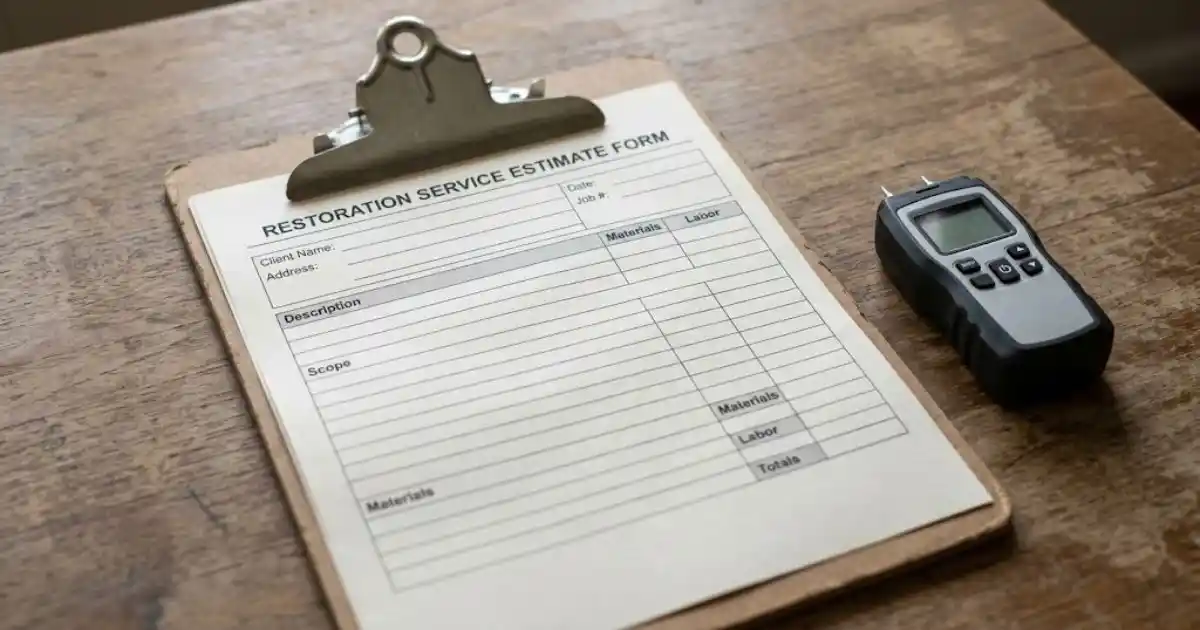
A proper written scope breaks down labor, equipment rental days, any material removal and disposal, and, if applicable, reconstruction costs as separate line items rather than one lump figure. This level of detail is what most insurance adjusters expect to see, and it also gives you, as the homeowner, a clear understanding of exactly what you're paying for at each stage of the job. Asking for this breakdown specifically, rather than accepting a single lump-sum figure, gives you the tools to compare quotes fairly if you decide to get a second opinion before committing to a job.
Why Finished Basements Cost More to Restore Than Unfinished Ones
A finished basement carries drywall, flooring, and often built-in cabinetry or trim, all materials that add real cost once water damage requires their removal and replacement, compared to an unfinished basement's exposed concrete and framing that can often be dried and cleaned in place. This distinction is worth knowing before a flood happens, since it affects both the realistic cost range to expect and, for homeowners still finishing a basement, whether flood-resistant material choices are worth the extra upfront cost given the area's documented flood history. Homeowners planning to finish a basement in a home with any documented flood history may want to discuss flood-resistant material choices, like closed-cell insulation and moisture-resistant flooring, with their contractor during that planning phase, since those choices can meaningfully reduce future restoration cost if the basement does flood again down the line. It's a relatively small planning conversation that can meaningfully change the cost picture of a future event, and one worth having before finishing work starts rather than after a flood has already made that decision for you the hard, expensive way, with far fewer choices left on the table by that point.
| Job Type | Typical Range |
|---|---|
| Single-room clean water extraction | $350 - $1,100 |
| Multi-room water damage with drying | $1,500 - $5,500 |
| Contaminated water (sewage) cleanup | $800 - $6,500 |
| Whole-structure flood restoration | $5,500 - $18,000+ |
Dealing With This Right Now?
Call for same-day dispatch in Winder and Barrow County.
Common Questions
We can give general ranges based on what you describe, but a written, accurate scope requires an on-site assessment, since factors like how far water traveled aren't always visible over the phone.
It depends on your specific policy and the cause of the damage. We document everything clearly so your adjuster has what's needed to determine coverage.
Even visually similar water damage can differ significantly once assessed, since factors like how long water sat, what materials it reached, and whether it was clean or contaminated water aren't always obvious just from looking at a wet floor.
Generally yes, since there's more finished material, drywall, flooring, sometimes built-ins, at risk in a finished basement compared to exposed concrete and framing in an unfinished one.
If you're dealing with this in Winder, our Water Mitigation page covers the full process, and we also cover Loganville on regular dispatch.
Have Damage That Needs Attention?
Call now for emergency dispatch anywhere in Winder and Barrow County.
☎ Call (678) 798-8530