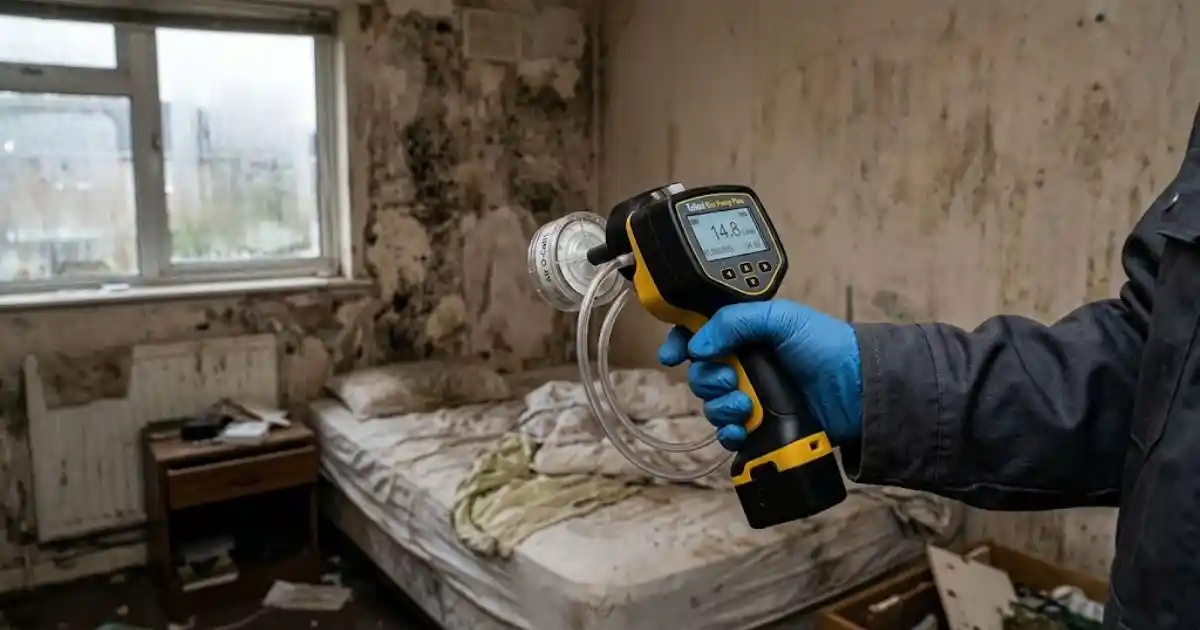
If you've never had a mold inspection done and aren't sure what to expect, the process is more methodical than most people assume, and it's built around finding moisture patterns, not just confirming a smell.
The Visual Walkthrough Comes First
An inspector starts with a visual review of the property, giving particular attention to bathrooms, basements, attics, and any area with a documented history of past leaks or water events. This isn't just looking for visible mold, it's identifying conditions, like poor ventilation or past staining, that suggest where hidden growth might be developing.
This walkthrough also includes asking the homeowner directly about any past leaks, repairs, or water events they remember, even ones that seemed minor or fully resolved at the time, since that history often points an inspector toward areas worth checking more closely than a purely visual pass would reveal on its own.
Moisture Readings Do the Real Detective Work
Moisture meters check materials that look dry on the surface but might be holding elevated moisture underneath, this is often how hidden growth behind a wall or under flooring gets identified before it's visible. Readings are compared against known dry baselines for each material type, not just a general sense of whether something feels damp.
Different materials, drywall, wood framing, subfloor, all have different normal moisture ranges, which is why a single moisture reading isn't meaningful without knowing what's normal for that specific material. This is part of why moisture mapping across a suspected area, not just a single spot check, gives a much more reliable picture of where a hidden problem actually is.
When Sampling Is Actually Necessary
Not every inspection needs air or surface sampling to move forward. Visible mold with an obvious moisture source often has enough information to scope a remediation plan without lab analysis. Sampling becomes more useful when there's a musty odor with no visible source, or when documentation for an insurance claim or real estate transaction specifically calls for it.
Sampling adds cost and time to an inspection, which is why we don't default to it for every job. Being upfront about when it's genuinely useful versus when it's an unnecessary add-on is part of giving an honest assessment rather than recommending every available test regardless of whether it changes the remediation plan.
Real, Industry-Standard Practices We Follow
Our process follows IICRC S520 guidelines, the published industry standard specifically for mold remediation, for how inspections and subsequent remediation work should be structured. This is a factual statement about following an industry-wide standard, not a claim of a personal certification we haven't confirmed we hold.
What Happens After the Inspection Is Complete
Once an inspection identifies mold, its likely source, and the extent of the affected area, we provide a written scope outlining the recommended remediation steps, from containment through material removal and final clearance. This gives you a clear picture of what the actual remediation work will involve before committing to it, rather than an inspection that ends with a vague recommendation to call for remediation without specifics.
If the inspection didn't find an active mold problem but did identify conditions that could lead to one, elevated humidity, poor ventilation, a past leak that wasn't fully dried, we document those findings too, since addressing a contributing condition before mold actually develops is more useful information than a report that only confirms the absence of mold at that specific moment.
Why an Inspection Is Worth Doing Even Without an Obvious Problem
Some inspections happen not because of a known mold concern but as part of a real estate transaction, a general home health check, or lingering concern about a past water event that seemed fully resolved at the time. In these cases, a thorough inspection can provide real peace of mind, or catch an early-stage issue before it becomes a larger, more expensive problem, which is often more valuable than waiting until mold is visibly obvious to take the situation seriously.
What If the Inspection Doesn't Find Any Active Mold?
That's a genuinely good outcome, and if any contributing conditions like elevated humidity or poor ventilation were noted, addressing those proactively can help keep it that way. We document these findings clearly rather than treating a clean inspection as nothing worth reporting, since a homeowner benefits from knowing what to watch for even when the immediate answer is reassuring.
How Findings Get Used Differently Depending on Why You Called
An inspection requested for a real estate transaction is typically reviewed against different standards than one requested purely out of a homeowner's own curiosity or concern, since a transaction-related inspection often needs to meet specific documentation requirements a lender, buyer, or seller's attorney might reference later. We tailor how findings are documented based on the actual reason for the inspection, so the report is genuinely useful for whatever specific purpose prompted the call in the first place, rather than a generic template that doesn't quite fit the situation. A homeowner requesting an inspection purely out of personal concern, with no transaction or claim pending, generally gets a more conversational, plain-language report focused on practical next steps rather than one structured around the specific documentation formats a lender or insurer might expect to see. Both versions are equally thorough, they're just tailored to what will actually be useful to the person reading the report afterward, whether that's a homeowner making a decision or a third party reviewing the documentation later on down the road, whether that's for a lender, a buyer, or the homeowner's own genuine peace of mind about a property they plan to keep and live in for years to come, not just the immediate transaction at hand.
Dealing With This Right Now?
Call for same-day dispatch in Winder and Barrow County.
Common Questions
A standard single-area inspection is often completed within an hour or so, while a comprehensive whole-home inspection with multiple problem areas takes longer.
Yes, findings are documented in a way that supports whatever the inspection was requested for, whether that's a remediation plan, an insurance claim, or a real estate transaction.
It's a reasonable step for any older property, especially one with visible past water staining or a history the seller mentions, since it gives you a clearer picture before finalizing a purchase decision.
That's a genuinely good outcome, and if any contributing conditions like elevated humidity or poor ventilation were noted, addressing those proactively can help keep it that way.
If you're dealing with this in Winder, our Mold Testing page covers the full process, and we also cover Loganville on regular dispatch.
Have Damage That Needs Attention?
Call now for emergency dispatch anywhere in Winder and Barrow County.
☎ Call (678) 798-8530