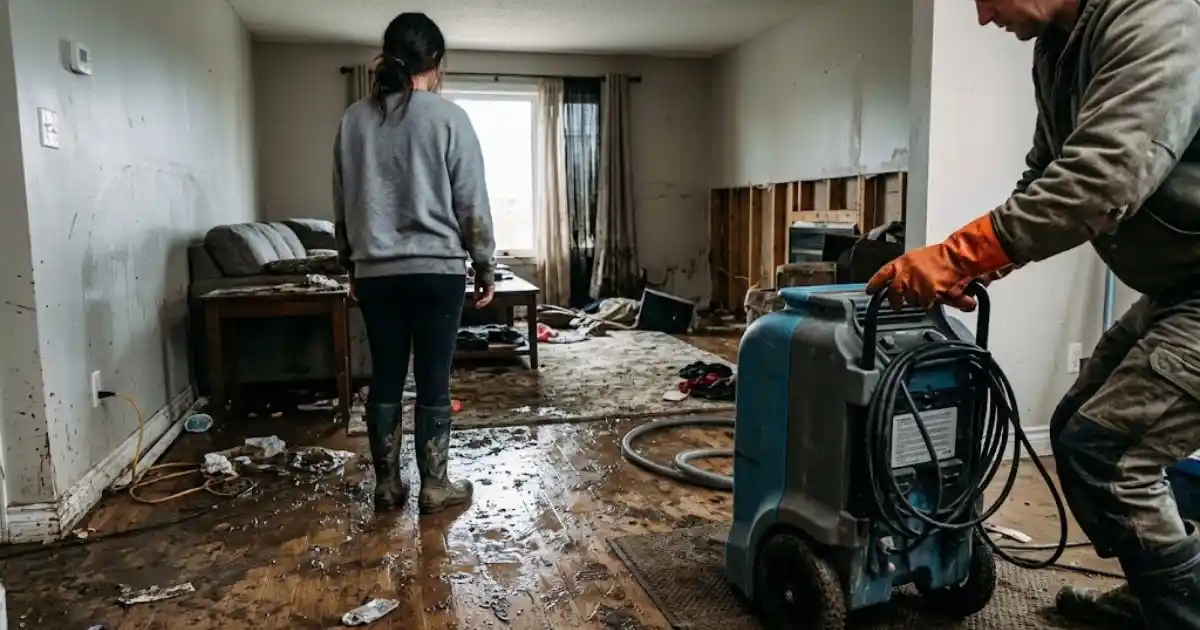
The first day after a flood shapes how much of the damage becomes permanent. Here's a realistic, practical rundown of what actually helps in that window.
Safety Comes Before Anything Else
Do not enter standing water if there's any chance it's near an active electrical source, and do not use household appliances that were submerged until they're inspected. If the flooding involved any contact with sewage or runoff, treat it as contaminated water and avoid direct contact where possible.
If you're at all unsure whether power to an affected area has been safely shut off, treating the space as unsafe until an electrician or your utility confirms otherwise is the right call, even if that means waiting longer than you'd like before starting cleanup. No amount of urgency around water damage is worth an electrical safety risk.
Document Before You Start Moving Things
Photograph the water level, affected rooms, and any damaged belongings before cleanup begins. This documentation matters significantly for whichever insurance process applies, whether that's a standard homeowners claim or a separate flood policy, and it's much harder to reconstruct after the fact.
Take photos from multiple angles and include something for scale where possible, a doorway or piece of furniture, since a clear sense of water height and spread helps an adjuster understand the event's severity far better than photos alone without that context. A short video walkthrough of the affected areas is also worth doing in addition to still photos.
Start Extraction as Soon as It's Safe
The faster standing water is extracted, the less it soaks into subfloors, framing, and belongings. Waiting to see if it dries on its own, or waiting for an adjuster visit before taking action, generally works against you, since most policies include an expectation of reasonable steps to prevent further damage.
This is genuinely one of the more misunderstood parts of the insurance process: homeowners sometimes assume touching anything before an adjuster sees it will hurt their claim, when in most cases the opposite is true, since policies expect reasonable mitigation steps regardless of when the adjuster visit happens. Documentation, not inaction, is what protects your claim.
Protect What Can Still Be Saved
Move salvageable furniture, rugs, and belongings off wet flooring rather than leaving them to sit in standing water. Discard any food or medication that came into contact with floodwater, since contamination risk isn't worth the cost savings of trying to keep it.
For items with sentimental or significant monetary value that got wet, separating them into a dry area as quickly as possible gives a much better chance of successful restoration than leaving them in a damp room even for another few hours, since materials like paper, photographs, and untreated wood are especially vulnerable to fast, permanent damage from continued moisture exposure.
Call for Professional Extraction and Drying
Even a flood you feel confident cleaning up yourself benefits from a moisture check, since water travels further into subfloors and framing than the visible wet area suggests. Professional extraction and structural drying in the first 24 to 48 hours is the single biggest factor in whether mold becomes a second problem on top of the flooding itself.
What Happens in the Days That Follow
After initial extraction, structural drying with air movers and dehumidifiers typically continues for several days, monitored with moisture readings to confirm materials are actually reaching a dry baseline rather than just appearing dry on the surface. This monitored approach is what distinguishes professional drying from simply running a few fans and hoping for the best.
Once drying is confirmed complete, any materials that couldn't be salvaged, certain flooring, drywall that stayed wet too long, damaged belongings, are addressed as part of finishing the job, and repair or reconstruction work can begin on a confirmed dry foundation rather than one that only looks dry.
A Final Word on Not Waiting Too Long to Call
Some homeowners wait a day or two after a flood to see how things look before calling for help, hoping the situation resolves on its own or turns out to be less serious than it first appeared. That delay is exactly the window where the difference between a manageable job and a much larger one gets decided, which is why calling promptly, even just to get a professional assessment, is almost always the better choice over waiting to see.
How Long Does the Full Drying Process Usually Take After a Flood?
It varies by how much area and material was affected, but several days of monitored drying with air movers and dehumidifiers is typical before repair work can safely begin. Setting this expectation early helps avoid the frustration of assuming a flooded space should be back to normal within a day or two, when the actual drying science behind preventing a mold problem genuinely requires that longer, monitored window regardless of how motivated everyone is to move faster. Moisture readings taken daily during this window, rather than a single check at the start, are what actually confirm the space has reached a genuine dry baseline rather than just looking and feeling dry to the touch. Confirming that genuine dry baseline is what ultimately protects against a mold problem showing up weeks after everything appeared to be back to normal and the immediate crisis felt long since fully resolved and behind everyone, well before anyone would have thought to check for it again on their own initiative, without a specific reason prompting them to go looking for trouble that no longer seemed present.
Dealing With This Right Now?
Call for same-day dispatch in Winder and Barrow County.
Common Questions
No, most policies expect reasonable steps to prevent further damage, which includes starting extraction. Document thoroughly first, then begin mitigation rather than waiting.
Only if you're confident it's not near an electrical hazard and the water isn't contaminated. When in doubt, treating it as unsafe for DIY extraction is the safer call.
As soon as possible, ideally within the first 24 to 48 hours, since that window is when the difference between adequate and inadequate drying most determines whether mold becomes a secondary problem.
It varies by how much area and material was affected, but several days of monitored drying with air movers and dehumidifiers is typical before repair work can safely begin.
If you're dealing with this in Winder, our Flood Cleanup page covers the full process, and we also cover Loganville on regular dispatch.
Have Damage That Needs Attention?
Call now for emergency dispatch anywhere in Winder and Barrow County.
☎ Call (678) 798-8530